
Why Educated Adults Turn Violent
One of the most disturbing questions I find myself asking—again and again—is this:
How do educated, socially connected adults end up at the edge of violence?
These are not impulsive teenagers or socially isolated individuals. These are professionals. Colleagues. Friends. People who have shared meals, memories, trust, and common goals. And yet, in a moment, words sharpen, tempers flare, and what once looked like civility collapses into aggression.
When I examine such episodes closely, the explanation is rarely a lack of intelligence or education. More often, it is a failure of emotional intelligence. I am presenting my understanding of such behaviours in this blog.
1. Violence is Rarely About the Situation
In organizations, boardrooms, institutions, and high-performing teams, I have repeatedly observed the same pattern: violence or near-violence is not triggered by objectively extreme circumstances. But this is triggered by unmanaged emotions.
Anger, pride, fear, resentment, and ego are normal human emotions. They become dangerous only when individuals lack the internal skills to recognize and regulate them. In psychological terms, this is not an emotional overload problem—it is an emotional governance problem.
https://thelifeuddeshya.com/ego-at-work-place/
2. The Invisible Beginning of Aggression
Violence does not start with action. It starts with unnoticed emotion.
A small irritation that is ignored.
An ego injury that is denied.
A quiet resentment that is normalized.
Many adults mistake emotional suppression for maturity. In reality, suppression is emotional blindness. Unrecognized emotions do not disappear; they operate below awareness and shape behavior from the shadows.
Psychologically, this is where self-awareness breaks down. When emotions are not consciously named, they begin to control reactions automatically.
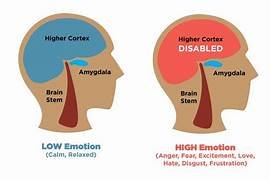
3. Emotional Hijacking and Loss of Control
What we commonly describe as “losing one’s temper” is, from a neuroscience perspective, a process known as emotional hijacking. In moments of perceived threat, the. Clear thinking narrows, impulse control weakens, and aggression feels justified.
This is not the absence of intelligence—it is the temporary shutdown of it.
The difference between a violent reaction and a regulated response lies in emotional intelligence: the capacity to pause, reflect, and choose rather than react.
 4. Identity Threats, Not Facts
Adults rarely fight over facts. They fight over identity.
Respect, status, moral superiority, masculinity, and social standing form the psychological core of adult conflict. When identity feels threatened, the brain interprets it as a survival issue. Rational dialogue gives way to defensive aggression.
Without emotional intelligence, the ego becomes easily weaponized.
5. The Role of Empathy Loss
Disagreement does not destroy relationships, but loss of empathy does.
The moment we stop seeing the other person as a human being with emotions and vulnerabilities—and start seeing them as an opponent or threat—violence becomes psychologically possible.
Empathy is not softness. It is a critical regulatory mechanism that keeps aggression in check.
https://www.psychologytoday.com/us/basics/empathy
6. When Communication Fails
Most adults were never taught: how to disagree without humiliating, assert boundaries without hostility, or express anger without attack. As a result, conflicts tend to escalate in a predictable psychological sequence:
Silence → sarcasm → insult → aggression
In many cases, violence is not a moral failure. It is a communication breakdown combined with emotional illiteracy.
7. Group Psychology and Amplified Aggression
Aggression becomes even more likely in group settings. Responsibility diffuses, emotional restraint weakens, and hostile behavior finds validation. Individuals in groups often act in ways they would never consider doing when they are alone.
Without collective emotional intelligence, groups become emotionally reckless systems.
8. Re-framing Adult Violence
Violence is not strength. It is not courage. It is emotional incompetence expressed through action.
A society that prioritizes IQ, degrees, and technical skills while neglecting emotional intelligence produces adults who are intellectually capable but emotionally unstable.
9. What Psychology Tells Us About Prevention:
If peaceful coexistence is the goal, emotional intelligence must be treated as a core psychological skill rather than an optional trait. This means:
-
Teaching emotional literacy early.
-
Normalizing emotional expression without aggression.
-
Developing self-regulation as a life skill.
-
Recognizing empathy as a leadership competence.
Emotional intelligence is foundational—not only to personal relationships, but to democratic dialogue and social stability.
10. Take-away
What I understand is that societies do not collapse because people feel anger. They collapse because people do not know how to handle it.
Therefore, the future of harmony lies not in suppressing emotion, but in mastering it.
Dr. Lokesh N. Rai
P.S.: Did you find something useful in this post? Please offer your comments in the comment box. Send your email ID for a free consultation.
12 Responses
A great message on mastering emotions and not suppressing them.
Thanks.
Thanks a lot.
Namaste Rai sir.
This article of yours highlights a major paradox of our times. It is truly essential to understand that while degrees and intellectual capacity (IQ) may indeed lead us to success, emotional intelligence (EQ) serves as the true foundation for remaining a ‘civilized adult.’ The points regarding ’emotional hijacking’ and ‘threats to identity’ are particularly impactful. Your endeavor to raise societal awareness regarding mental health and self-awareness is highly commendable. Thank you for sharing!”
Thanks a lot Dr. Anil Patel. Sometimes, I am forced to think about the assymetric behaviour of adults.
Your observations are to the point and being in adult zone we must set examples.
Thanks for sharing your thoughts.
This is thought provoking, I read word by words couple of times to understand it better. Your articulation of communication failure is simply amazing and reflects reality of our life, we simply stuck in the chain. It takes life time to understand & learn “how to handle it”.
Thanks for such amazing and wonderful message.
Thanks a lot dear Sanjay. I used to think about such situations which were not so uncommon in our personal or professional life. Recently, I witnessed another case and I was forced to write about this.
I am happy that my thoughts resonates with you and you have taken trouble to offer your thoughtful message.
Thanks.
Insightful & reflective – Very well put. Emotional intelligence isn’t just a personal skill anymore—it’s becoming a societal necessity. The way we handle emotions today shapes the stability of tomorrow.
True Prarop. This is a societal necessity.
Excellent article and so well articulated.
Even one can’t understand and gets trapped to it and feels like it’s a common behaviour of the society. We must think and must act on it.
Must read article for everyone,infact it needs to be showcased in bigger platform.
Thanks for sharing……..
Thanks Amit.
Dear Rai Saheb,
Nice article on life’s most effective subject: how a matured person reach ..silent to vibrant to violent in different situation of life…. Emotion, aggretion,loose temper, downfall.. social break down.
Only positive support from such blogs can make smile in life once again. Regards🌹🙏Nigam
Thanks Nigam. Very well understood.